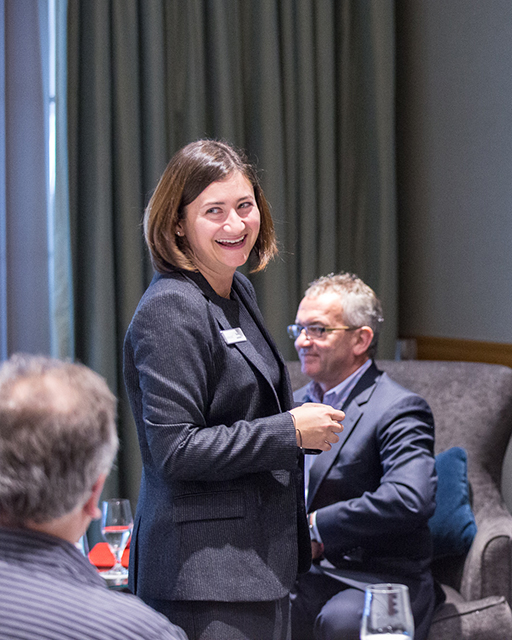
Principled Leader, Change Agent, Truth-Teller, Maven, Guru, Mentor.
An experienced and engaging speaker, motivator and leader, Tara Landes is the
president of MRSI Benchmarking, a full service benchmarking and change
management firm committed to delivering lasting change in small and mid-sized
businesses across the United States and Canada. Researching best practices from
multiple industries, Tara’s team takes companies from where they are now to
where they want to be, so they may achieve their goals and full potential.
She earned
an MBA from the Richard Ivey School of Business and since 2000, she has worked
with small and mid-sized businesses throughout North America implementing
lasting, valuable change. She returned to her native Vancouver in 2008 to
expose companies to the power of process benchmarking.
Currently, Tara is a mentor in the Board of Trade’s LOT (Leaders of Tomorrow) Mentorship Program and the FWE (Forum for Women Entrepreneurs) HSBC Mentor Program. When she is not helping clients, you’ll find her on a sailboat in the Gulf Islands, watching her husband and sons fish.
Innovation: Winning More RFP's (January / February, 2012)
Interview ECNTV: MRSI Benchmarking at ChannelNext West 2011
Business in Vancouver: How to keep your clients: Account review meeting (October 17, 2011)
Vancouver Sun: Tips for writing the dreaded RFP response (September 21, 2011)I returned
to my hometown of Vancouver in 2008 after eight years building my career as a
management consultant in Toronto.
Who moves away from Toronto as a
career move?
As my maternity leave was winding down after the birth of my first child, I
realized I wanted to come “home.” I began applying for typical MBA-type jobs in
Vancouver, and even found some. But I wanted to do what I loved—which was what
I had been doing in Toronto—that is, implementing lasting, valuable change in
small companies. I loved it because I was able to quickly see, firsthand, the
results of my labour. When change works, it’s like a drug. And I wanted more of
it. Just in Vancouver.
While some of “the big five” consulting firms have an office in Vancouver, most
of their work is not done locally. If I wanted to consult, it looked like I was
going to have to travel a lot and live in a hotel – not the life I dreamed of
as a new mother. Instead, I wanted local
clients to allow me to meet my personal commitment of having dinner most nights
with my family. Around the table. No TV. I took consulting work off of the
table and focused on other, corporate choices.
I was lamenting the 24 / 7 corporate life that appeared to be my future with my former boss in Toronto, when he said, “Why don’t you try to sell a consulting project in Vancouver? If you can, you can start a company. If you can’t, take one of those corporate jobs. What have you got to lose?” Well, nothing when you put it that way.
I sold a project almost immediately. Then soon I had to start bringing the staff that used to work for me in Toronto out to Vancouver just to meet the demand.
Then 2009 happened.
For the business world, that meant the global economic meltdown. For me personally, global events coincided with me falling unexpectedly pregnant with my second child. I had just started a company. I was its main business development driver. Still a start up, we had virtually no referral business and, compounding matters, as the 2010 Olympics fast approached I could not convince anyone to take a meeting. They were either “preparing for the Olympics”, or “going to the Olympics”, or trying to “get out of town to avoid the Olympics.” It was a disaster for my company.
By the time the Olympic torch returned to Athens, I was five months pregnant. Now that I could finally get a meeting, people would listen politely, look me up and down and say, “Call me in the fall.” Looking back, 2010 was tough. I even had to lay someone off. But the team rallied – they were amazing, really – and I learned some great lessons about delegation and loyalty.
Today, we’re back stronger than ever. What a relief! A handful of full-time local staff and a growing track record of satisfied, Vancouver based clients. In the best of times, explaining the value of management consulting is incredibly challenging. Small business owners typically haven’t used a consulting firm before. They don’t immediately understand what they’d even be buying (“so do you create a report, or what?”) We’re competing for dollars our prospects would otherwise spend on a new machine for the shop floor or sales automation software or even a new manager. For that reason, we don’t perceive our competitors to be other consulting firms.
If I can help them to understand the value of an outside perspective, more often than not, they turn to us. They know where their business needs to be; yet, try as they might they haven’t been able to get the traction. And that’s where what my company does is a game changer. We use process benchmarking. We listen. We mentor. We work long hours right in their place of business, alongside them. We get what it’s like for them. And we believe in them and their potential. The rewarding part is that we get amazing results. Sometimes it’s not until six months, or even a full year after we’ve finished the hardest work with a client that they realize just how far they’ve come. How much change their business, and themselves, have really undergone.
It’s been an up-and-down ride these past few years. With two wonderful children to mother now, along with a husband, friends and extended family to share time with, I also have new clients coming to us every day and a growing, eager complement of staff. Personally, I’m looking forward to the next chapters in my own story more than ever before.
- Tara
Have a comment? You can reach Tara directly at: tlandes@mrsiconsulting.com
Hey Darren, you’re best to start with very specific goals, evaluate all of the alternatives for achieving them (blogging being one) and then deciding. I started the blog for a very specific and non-SEO reason, and I’d say I didn’t really accomplish it. So I’m not a huge fan, but I’ll give it more time. It can be time consuming and depends on your goals. For marketing, my permission based mailchimp has been much more productive, and I use the articles I write on my wordpress website to improve SEO. Happy to talk to you about it further off line.
People spend a lot of time and money staging their houses for sale….much more than their business.
The first house we owned was just off the Danforth in Toronto and was built in 1916. The previous owner was born in the house and died in it too - a “fixer upper” with lots of “potential”. The kitchen had no cabinetry. The flooring was original. So was the wiring. But the windows were clean and framed the view of hydrangeas in full bloom in the back yard. And the realtor did something very clever to sell this house. On the dining room table, he displayed interior photos of the house two doors down. Identical to ours on the outside, but completely renovated on the inside. It was easy for us to picture our lives in that house.
When staging your business for sale, highlight the intrinsic value, of course. Just don’t forget to paint the picture of potential - what the business just like yours in a different locale has been able to accomplish. People want to buy potential.
Have you ever said any of the following?
Yes? Then finding, motivating and retaining people is the single most important success factor for your business. The rest can fall into place with great people. So if you don’t know the best practices for recruiting, learn them. If motivation is confusing get training. If you have a retention problem (retaining the wrong ones or losing the right ones) fix it quickly. And if you’re great at all of these things but your managers aren’t then run, don’t walk, to get them up to speed.
A word on outsourcing your core competency (people): Don’t use a recruiter unless you have a very specific and well defined or very low level box to fill. They typically don’t have access to the A-players of the small business world. If a recruiter can fill your company with great people, then those people aren’t going to make you unique for much longer.
A sales meeting should be as valuable for the sales people as it is for you, their manager. If you hold the meeting to update you, without giving them something in return, stop wasting everyone’s time.
If you win everything you respond to AND you make money on it, stop reading. Do you ever wonder, though, what your competitors’ proposals look like? Everyone wonders about the price, of course, but if the prices and specs are about equal is there a way to tip the scales in your favor?
The quick answer is no. There is no one way, there are dozens of ways. A benchmarking of your company’s proposal process would allow you to quickly ascertain which best practices you are using and to what degree. Which will effectively teach you your competitors secrets…at least the secrets of your competitors that are winning business.
I was speaking to the a president of a family business recently who said:
“When my dad retired, he just walked away. This one Monday, he didn’t show up. Again, on Tuesday, no dad. Then Wednesday, another no show. Totally unlike him. Finally, on Thursday, I called him and said, ‘So are you coming in today?’ and he said, ‘I don’t really feel like coming in any more.’ And he never did again.”
Clearly this was not a “best practice” delegation plan. But it’s astonishing how often people hand off tasks with little warning or no instructions on how to complete them. When you delegate, and not just big responsibilities like running the whole company but smaller tasks too, you don’t just walk away and hope it will all just happen without you. Always hand off tasks through controlled delegation. Here’s how:
1. Communicate verbally what you want done. Be clear about the frequency of the task and the process they must follow. Example:
“Sue, I’m only going to check the daily sales stats weekly, but I want to make sure that you do it daily. What I look for are these three factors. They allow me to follow up on the specific accounts that are weak. You may already be doing this too, but I want to reinforce that I’m not going to do it anymore so there will be no double check. Can you take this on?”
2. Get them to restate in writing what you said (to make sure they understood your instruction). Revise if necessary.
Email: “Sue, today I mentioned I’m not reviewing daily stats any more. Please email a quick outline of how you will do it, how often, and what you’ll look to confirm we’re on the same page.”
3. Officially make it their duty by updating their job description.
4. Check in with tight frequency to see how it’s going. Make adjustments.
5. Taper off the check ins.
Controlled delegation is an important management tool. The more you use it, the more time you will gain back and be able to do the things that are really important, the things that only you can do.
A common internal language for your company can shortcut communication and take discussions to much deeper levels faster than you dreamed. Where I work, we do business in English, but have our own words as well.
“Don’t WUCIS me on that.”
“I E.P. Beaver’ed but messed up the verify.”
“We missed the morning call. What happened?”
Anyone who has worked for us (and most of their significant others) know exactly what those phrases mean and not just technically. There is an emotional resonance associated with these words built over time and consistent application.
You probably have your own set of words as well. “Meeting,” for example.
“Tom called a meeting for Tuesday” or
“I had a first meeting with the new prospect” or
“The operations meeting was really productive”.
Consider not just your personal definition of the word, but also the emotional response the words generate in others. If I interviewed 10 people in your company, how would they describe a “meeting” in your world?
If you get asked for an impromptu on camera interview, as I did here, remember to look at the interviewer. They, in turn should stand close to the camera so that it looks like you are almost looking at the audience.
And if you can manage it, get a much shorter camera man. Because I’m much taller than that - the guy holding the camera was about 7’!
If they are asking you to speak to the audience directly, then look directly into the camera. Here’s a piece I did for the Vancouver Sun: “How to give a company address.”
There was a very big decision to make yesterday. As with most big decisions, I sought my husband’s counsel. “Do I begin the 5th book in the Game of Thrones series tonight, or should I finish my book club selection Crucial Conversations?” Sorry MRSI. You’ll just have to wait until the 15th for my thoughts on Conversations. Tyrion awaits! Such an imp…..
20 - 40 year olds, take note! Every so often, an owner grabs my arm and furtively pleads, “I need a succession plan. Now. Help me. Now!”
In case you’ve been hiding in a media-free cave, the Boomers are turning 65 this year, having waited a decade already for the promised “Freedom 55.” The markets have them sticking around in their jobs longer than anyone thought, but a transition of power to the next generation is inevitable (Prince Charles being the exception that makes the rule).
If you were born after 1965, very soon you will be busy at work (not enough people to fill those senior roles), likely stretched from your comfort zone (you won’t have all that experience to fall back on), managing those tech-savvy millennials, paying more for your house than your grandparents could have possibly imagined and knowing, knowing, that retirement is a long way off.
Ask yourself:
1. How can I build my career to transition to part time work later in life?
2. What am I doing today to protect myself from burnout?
3. If I am fortunate enough to have enough money to retire, do I also have enough hobbies to keep me entertained?
Today I’m emceeing a technology conference. Between speakers, I’m offering tips on how to network at events such as these – always tricky, particularly if you don’t already know someone.
Networking is about building connections. Not one way connections to you, but a web of connections that can travel through you. “Oh, you’re building a new plant? I know a great construction management company.” “Gifts for your staff – you need to check out this glass artist!” “You’re going to Maui? I stayed in the most fabulous condo – let me connect you.”Don’t be an “elevator” person just there to pitch people. Build meaningful karmic networks and reap the rewards.
PS: Take 30 seconds to customize the LinkedIn invitation. The generic ones are forgettable at best, insulting at worst.
Off to a conference? Approach it with this level of enthusiasm. If you’re doing something, DO IT.
In Mastering Crucial Conversations (our MRSI book club pick) they recommend you be simultaneously 100% honest and 100% respectful. A tall order in emotionally charged situations, I suspect, and requiring a degree of self-awareness across the table.
Well run one-on-one meetings motivate, focus efforts, resolve issues before they become problems, and keep everyone informed at the requisite level of detail. There is no simple substitution for a one-on-one, yet managers avoid them. “Too time consuming,” “too stilted,” “I talk to them all the time anyway,”…there are lots of reasons. Here’s the minimum requirement:
Five minutes, every second day. It can be a stand up meeting at the water cooler or popping your head in their door. The agenda:
Ideally, you then scribble some quick notes so you can follow up on what they said for the next go ‘round. Try it for a couple of weeks and let me know how it goes.
The first house we owned was just off the Danforth in Toronto and was built in 1916. The previous owner was born in the house and died in it too – a “fixer upper” with lots of “potential”. The kitchen had no cabinetry. The flooring was original. So was the wiring. But the windows were clean and portrayed the hydrangeas in full bloom in the back yard. And the realtor did something very clever to sell this house. On the dining room table, he displayed photos of the house two doors down. Identical to ours on the outside, but completely renovated on the inside. It was easy for us to see what we could do and what our lives would be in that house.
When staging your business for sale, highlight the value you have instilled, of course, but also demonstrate what it could be - what the business that does just what yours does but in a different locale has been able to accomplish. People don’t just buy value. They buy the dream. They buy potential.
Well hello. To get things moving over here, we have decided, at MRSI, to form a book club. Reading the latest business books is important for us as management consultants, but, let’s admit it, finding the time can be hard. Enter (re-enter?) Ashley’s book club. We are encouraged by the work of Chris Taylor over at Actionable books, and will begin by tackling his latest recommendation: Crucial Conversations: tools for talking when stakes are high. Chris gives a wonderful intro to the book here.
So, give us a little time to read it, and we’ll be back in full force to discuss.